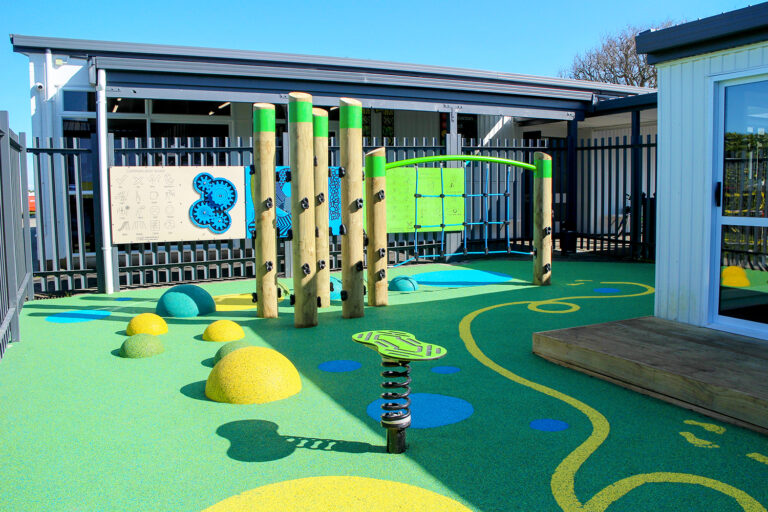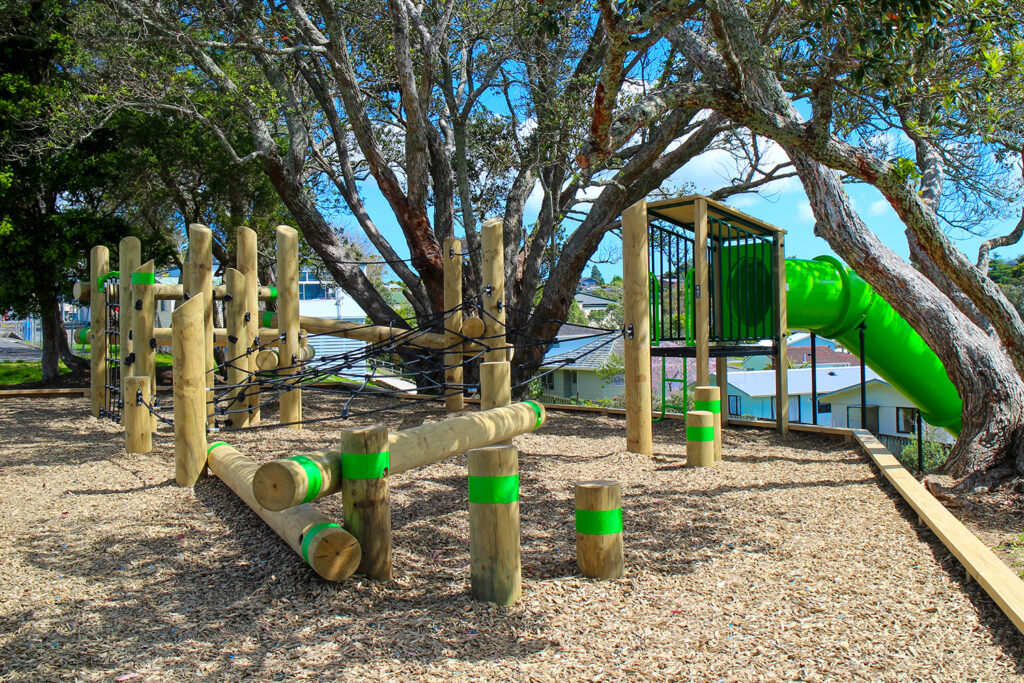
For a long time, the modern playground was defined by neon plastics and industrial metals. But if you’ve visited a new park or school playground lately, you’ve likely noticed a shift. The bright, manufactured look is being replaced by something more grounded, organic, and timeless: timber.
We’re seeing a significant resurgence in the use of wood for play spaces. It’s not just a nostalgic trend, timber is making a comeback because it solves many of the challenges of modern urban design while providing a superior experience for children.
Let’s take a look at why timber is reclaiming its crown in the world of play.
Reconnecting with Nature Play
We live in an increasingly digital world, and there is a growing demand for play spaces that reconnect children with the physical, natural environment. Timber is the ultimate medium for nature play. It encourages imagination and sensory exploration in a way that plastic simply can’t. Whether it’s the texture of the grain or the earthy scent of the wood, timber invites children to engage their senses and explore.
A Seamless Natural Aesthetic
One of the greatest strengths of timber is how it sits within the landscape. In New Zealand, we are blessed with stunning parks, reserves, and coastal settings. Timber structures blend comfortably into these environments, whereas bright plastics and metals can often feel like an intrusion. Timber allows the playground to be part of the scenery, not a distraction from it.
A Calmer, More Inviting Atmosphere
Moving away from cold, industrial metals and over-stimulating bright plastics, timber offers a warmer experience. Its natural, tactile quality is softer to the touch, while its subtle colour palette significantly reduces the visual clutter often found in modern public spaces. This creates a more peaceful, welcoming environment, not just for children who may feel overstimulated, but for caregivers and community members who want a space where they truly feel like lingering.
Durability and Graceful Aging
One of the biggest misconceptions is that timber doesn’t last. In reality, timber avoids many of the common pitfalls of metal. There is no rusting, and no painted coatings that chip or fade over time. In fact, timber is often the superior choice for New Zealand’s coastal or high-moisture areas where metal deterioration is accelerated. While metal starts to look a little beaten up as it ages, timber weathers naturally, often enhancing the character of the playground as the years go by.
More Play for Your Budget
When it comes to value, timber is incredibly efficient. Because it is so versatile, budgets can often be directed toward creating diverse, bespoke play experiences rather than being swallowed up by expensive manufactured components. It also allows for highly customisable designs that can be adapted to the specific conditions of your site.
Encouraging Creative, Open-Ended Play
Modern play theory suggests that the best equipment is non-prescriptive, meaning it doesn’t tell a child exactly how to play. Timber lends itself perfectly to open-ended structures. Instead of a single-outcome slide or rocker, timber beams, decks, and posts invite children to decide for themselves if they are climbing a mountain, defending a castle, or navigating a ship.
The Sustainable Choice
Finally, in an era where we are all more conscious of our environmental footprint, timber is the clear winner. When sourced responsibly, timber is a renewable resource with significantly lower embodied energy than steel or plastic. Choosing timber is a vote for a more sustainable future for the very children who will be using the playground.
Designing for the future requires balancing longevity, safety, and a deep respect for our environment. As we look at the changing demands of modern play, the return to timber represents a thoughtful shift toward smarter, more sustainable design. It’s about choosing materials that do more than just stand the test of time, they get better with it, enriching play experiences in ways that manufactured alternatives simply cannot match.